There’s something different about how indie music has felt lately. Not louder, not necessarily bigger, but more intentional. I found myself going back to albums this past year, not just for the sound, but for how they made me sit with things a little longer. The storytelling feels heavier, the production more layered, and the artists? They’re not playing safe anymore.
What stood out the most wasn’t just who won awards, but why they won. These albums didn’t follow a formula. They stretched genres, blurred lines, and leaned hard into emotion. If anything, 2025–2026 felt like a reset for indie music, where experimentation finally met recognition on bigger stages.
What Makes An Indie Album Award-Worthy Today
Indie albums winning major awards now aren’t just about being “different.” That phase is long gone. What matters today is depth, both sonically and emotionally.
A few clear shifts are shaping award-winning indie albums:
- Artists are blending genres like alt-country, electronic textures, and orchestral elements
- Lyrics feel more narrative-driven, almost cinematic
- Production is more intentional, less “lo-fi for the sake of it.”
- Albums are built as full experiences, not just collections of songs
This is exactly why many award-winning indie albums in this period feel more immersive than ever.
The Albums That Truly Redefined Indie Music (2025–2026)
Sam Fender- People Watching
Winning the 2025 Mercury Prize wasn’t just a milestone it felt inevitable. Sam Fender leaned into storytelling about working-class life, but this time with a much wider sonic palette. The album feels cinematic without losing its raw edge. It’s one of those records that builds slowly but hits hard when it lands.
Wet Leg- Moisturizer

After their breakout, expectations were high, and Wet Leg didn’t play it safe. Moisturizer kept its signature wit but expanded into a fuller, more aggressive guitar-pop sound. It’s chaotic in the best way. The Album of the Year nomination at the AIM Independent Music Awards made sense, it captured energy that felt both messy and controlled.
Jessica Pratt- Here in the Pitch
This one felt quiet at first, but it stayed with you. Winning multiple honors at the Libera Awards, the album redefined indie-folk by leaning into atmosphere rather than structure. Her voice almost floats through the production, making it feel less like songs and more like scenes.
Fontaines D.C. Romance
Known for their gritty post-punk roots, this album took a different turn. Romance softened some edges while expanding into richer, more layered sounds. Winning Best Rock Record at the Libera Awards, it proved that evolution doesn’t mean losing identity, it can mean refining it.
Geese- Getting Killed
This album doesn’t sit still. It jumps between genres, country, industrial, and avant-rock without warning. It’s unpredictable, but not chaotic. That balance is what made critics call it a standout. It’s the kind of album you don’t fully get on the first listen, and that’s exactly the point.
Ethel Cain- Willoughby Tucker, I’ll Always Love You
This album is heavy emotionally and structurally. With slow-burning tracks and detailed world-building, it feels more like a narrative experience than a traditional album. It pushed indie slowcore into new territory, making space for longer, more immersive storytelling.
CMAT- EURO-COUNTRY
CMAT brought something unexpected. Mixing alt-country with bold pop elements, this album feels both familiar and strange at the same time. The storytelling is sharp, sometimes biting, but always engaging. Its Mercury Prize shortlist spot shows how far indie boundaries have stretched.
Rising Albums And Artists Shaping The Indie Scene
Beyond the big winners, several critically acclaimed indie albums helped shape the direction of indie music during this period.
Nilüfer Yanya My Method Actor
A smooth blend of jazz, soul, and indie-pop. It feels effortless, but there’s a lot happening underneath. This is where indie starts to feel more fluid as a genre.
Japanese Breakfast For Melancholy Brunettes (& Sad Women)
This album leans into storytelling in a very visual way. It almost plays out like a series of folk tales, layered with gothic tones and emotional depth.
Wolf Alice The Clearing
Ambitious and expansive, this album brought a more “symphonic” feel into indie rock. It’s polished, but not overproduced, a balance that’s hard to pull off.
Trends That Defined Indie Music In 2025–2026
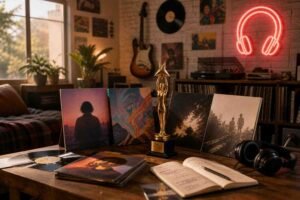
If you look at all these albums together, a few patterns become clear. Indie music isn’t trying to stay in its lane anymore; it’s actively avoiding it.
- Genre-blending is now the norm, not the exception
- Storytelling is becoming more immersive and long-form
- Artists are prioritizing emotional impact over viral appeal
- Production quality is rising without losing authenticity
This shift is also visible when you look at the Grammy Awards’ indie artists nominees, where the line between indie and mainstream keeps getting thinner, but the identity still holds.
Why These Albums Actually Matter
It’s easy to look at awards as just industry validation, but in this case, they reflect something bigger. These albums didn’t just win, they changed expectations.
They showed that indie music can be:
- Experimental without being inaccessible
- Emotional without feeling forced
- Polished without losing character
And more importantly, they proved that listeners are ready for that kind of depth.
Frequently Asked Questions: Best Indie Albums That Won Awards (2025–2026) That Redefined Indie Music
1. What are the best indie albums that won awards in 2025–2026?
Some of the most recognized include People Watching by Sam Fender, Moisturizer by Wet Leg, and Here in the Pitch by Jessica Pratt. These albums stood out for both critical acclaim and major award wins.
2. Why are indie albums gaining more recognition at major awards?
Indie albums today focus heavily on storytelling, production quality, and genre experimentation. This makes them more competitive alongside mainstream releases.
3. What trends are shaping indie music right now?
Genre blending, cinematic storytelling, and emotionally driven songwriting are defining the current indie music landscape.
4. Are indie albums becoming more mainstream?
Yes, but without losing their core identity. Many indie artists are reaching wider audiences while still maintaining creative control and authenticity.
A Closing Note On Where Indie Is Headed
Indie music right now feels like it’s in a phase of quiet confidence. It’s no longer trying to prove anything it’s just evolving on its own terms. The albums from 2025–2026 reflect that shift clearly. They’re more layered, more intentional, and more willing to take risks without worrying about fitting into a label.
And honestly, that’s what makes this era exciting. Not because indie is changing but because it’s finally expanding without limits.