Something feels different about success in music right now. You can see it when a song explodes overnight, racks up millions of streams, and then… disappears just as fast. A few years ago, that kind of visibility would’ve meant long-term recognition. Today, it barely guarantees stability. The rules haven’t just changed, they’ve been rewritten.
I’ve been noticing how artists who aren’t topping charts are still building stronger, more sustainable careers than those who are. It’s less about being everywhere and more about being deeply valued somewhere. That shift sits at the center of music industry recognition trends 2026, and it explains why traditional fame is starting to feel incomplete.
The Shift From Gatekeepers To Ecosystems
The music industry no longer runs on a gatekeeper model. It’s now an ecosystem, messy, decentralized, and far more open than before. Labels, radio, and charts still exist, but they’re no longer the only path to recognition.
Artists today are building what feels like mini economies around themselves:
- Direct fan communities
- Independent distribution
- Merch-driven income
- Live experiences and niche tours
Recognition now comes from how well an artist can sustain this ecosystem, not just how loud their moment gets.
Why Traditional Fame Is Losing Its Grip
The Exposure Vs Income Gap Is Real
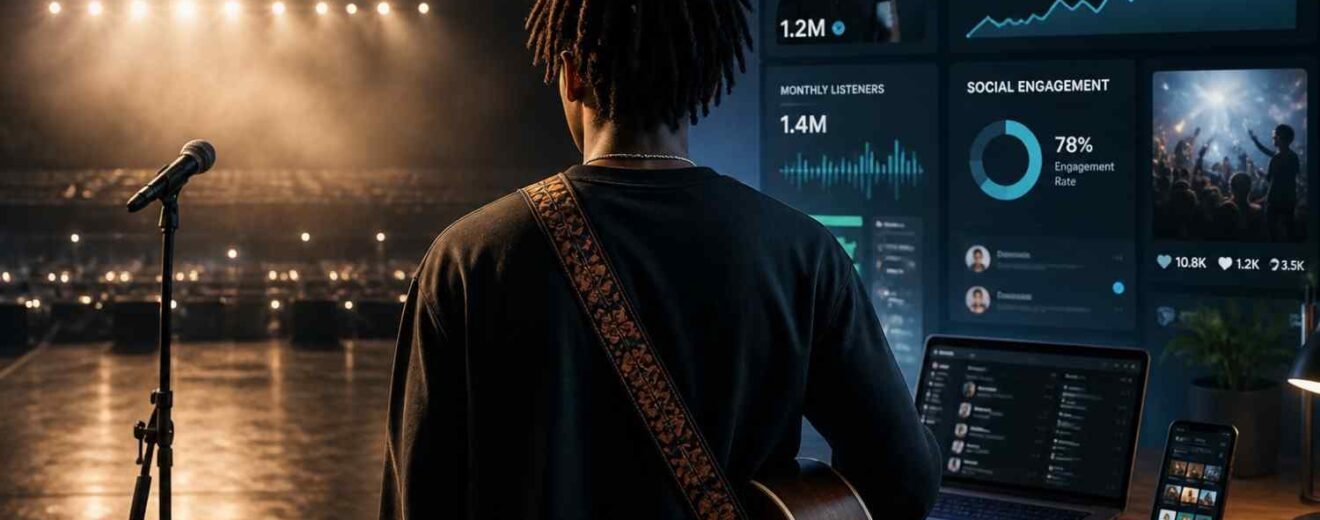
There’s a growing disconnect between visibility and financial stability. A viral track might generate millions of streams, but streaming payouts alone rarely support a career.
So what happens? Artists experience what many now call “the illusion of momentum.” They’re everywhere for a moment, but there’s no structure behind it, no merch funnel, no touring base, no loyal fan layer.
Without that infrastructure, fame becomes temporary noise.
Algorithms Are Crowded And Exhausting
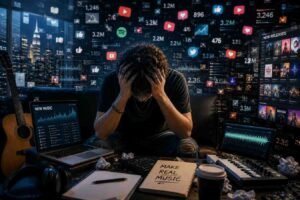
Discovery used to feel exciting. Now it feels saturated.
With tens of thousands of tracks uploaded daily, many AI-assisted algorithms are overloaded. Listeners are also feeling it. There’s a kind of quiet fatigue happening where people are moving away from endless scrolling and toward:
- Curated playlists by real people
- Private communities
- Smaller, trusted recommendation spaces
Recognition is slowly shifting from algorithmic exposure to human-led discovery.
Viral Success Doesn’t Last Long Enough
Short-form platforms can make a song huge overnight. But the lifecycle is brutally short.
A track might trend for a week, maybe two, and then vanish. Without a strong catalog or deeper connection, there’s nothing holding listeners in place.
That’s why long-term recognition now depends on:
- Repeat listening
- Emotional attachment
- Consistent output
Not just one big hit.
Recognition Looks Different In 2026
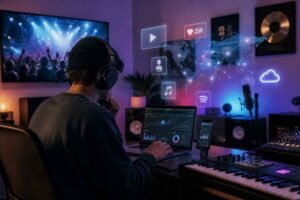
The definition of “making it” has changed. It’s no longer about scale alone; it’s about depth.
Community Is The New Currency
If there’s one thing shaping music industry trends 2026, it’s this: a small, loyal fanbase is more powerful than a massive passive audience.
Artists are focusing on their first 100–1000 real fans, the ones who:
- Show up consistently
- Share the music organically
- Buy, not just stream
These communities often live in:
- Discord servers
- Private fan clubs
- Niche online spaces
And they drive recognition in a way charts never could.
Shared Values Matter More Than Ever
Listeners are no longer just consuming music; they’re aligning with it.
Fans pay attention to:
- What an artist stands for
- How they communicate
- Whether their message feels authentic
This shift is subtle but powerful. Recognition now includes trust and alignment, not just popularity.
Physical Music Is Making A Quiet Comeback

It sounds unexpected, but physical formats are rising again.
Vinyl, cassettes, and even CDs are becoming part of how fans connect with artists. In a digital-heavy world, owning something tangible creates:
- Emotional attachment
- A sense of ritual
- Deeper fandom
This isn’t about nostalgia alone; it’s about authenticity.
AI Is A Tool, Not The Star
AI is everywhere in music now, but the artists who stand out aren’t the ones relying on it creatively; they’re the ones using it strategically.
They use AI for:
- Tour planning based on data
- Admin automation
- Audience insights
This frees them up to focus on what actually builds recognition: storytelling, emotion, and human connection.
Discovery Is Becoming Emotion-Based
Genres are slowly losing importance.
Listeners are moving toward music based on how it feels, not how it’s labeled. Instead of searching by genre, they’re engaging through:
- Mood
- Energy
- Situational listening
This shift makes emotional authenticity one of the strongest drivers of recognition today.
The New Success Model In Practice

If you compare how things worked before versus now, the difference is clear.
Old approach:
- Chase a viral hit
- Depend on labels and radio
- Focus on reach and scale
- Rely heavily on streaming revenue
New approach:
- Build a micro-economy
- Develop a strong fan community
- Focus on infrastructure and consistency
- Diversify income (live, merch, direct-to-fan, sync)
Recognition now grows from systems, not spikes.
Where Awards And Industry Validation Fit In
Traditional recognition systems are evolving, too. Awards still matter, but their role is changing.
They’re slowly opening up to reflect the new landscape, especially when it comes to independent artists. Conversations around Grammy Awards indie artists nominees are becoming more common, showing how the industry is trying to acknowledge talent beyond major label pipelines.
Still, there’s a gap. Real recognition often happens before formal recognition catches up.
Frequently Asked Questions: Music Industry Recognition Trends 2026: Why Traditional Fame Isn’t Enough Anymore
1. What defines success in the music industry recognition trends 2026?
Success is now defined by community strength, consistent engagement, and diversified income, not just chart rankings or viral hits.
2. Are streaming numbers still important for artists?
Yes, but they’re no longer enough. Streams help with visibility, but real recognition comes from fan loyalty and long-term engagement.
3. Why are independent artists gaining more recognition now?
Digital tools and platforms have reduced reliance on labels, allowing independent artists to control distribution, branding, and fan relationships directly.
4. How are music awards adapting to these changes?
Awards are slowly expanding to include more diverse and independent talent, though they still lag behind real-time industry shifts.
Wrapping Thoughts On What Recognition Really Means Now
Recognition in 2026 feels more grounded, but also more demanding. It asks artists to do more than just create; it asks them to connect, to build, to sustain. The spotlight isn’t enough anymore. What matters is what happens after the spotlight fades.
And maybe that’s not a bad thing. Because the artists who are being recognized today aren’t just the loudest, they’re the ones people actually stay with.